
Did you know that cold weather can silently harm the feet of people with diabetes?
While most people focus on warm clothing, diabetic patients need to pay extra attention to their feet during winter. Reduced circulation, dry air, and cold temperatures can make the skin brittle, leading to cracks, infections, or ulcers. Minor injuries may go unnoticed due to nerve damage, making foot care critical. Following Winter Foot Care Tips for Diabetics can prevent these problems and ensure your feet stay healthy all season. Experts at ஈரோடு நீரிழிவு அறக்கட்டளை stress the importance of proactive winter foot care.
Why Winter Foot Care Is Crucial for Diabetics
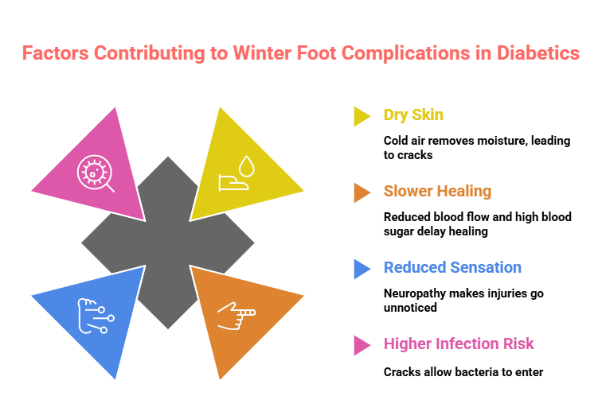
Winter increases the risk of foot complications for several reasons:
- Dry, cracked skin: Cold air removes moisture, making the skin prone to cracks.
- Slower healing: Reduced blood flow and high blood sugar slow the natural healing process.
- Reduced sensation: Diabetic neuropathy can make minor injuries go unnoticed.
- Higher infection risk: Cracks or sores can become entry points for bacteria, leading to serious infections.
Understanding these risks helps patients take preventive measures. Consistent foot care reduces complications and promotes long-term health.
Effective Steps: Winter Foot Care Tips for Diabetics
Following a simple daily routine helps keep your feet safe during winter. The ஈரோடு நீரிழிவு அறக்கட்டளை recommends the following measures:
Daily Foot Care Routine
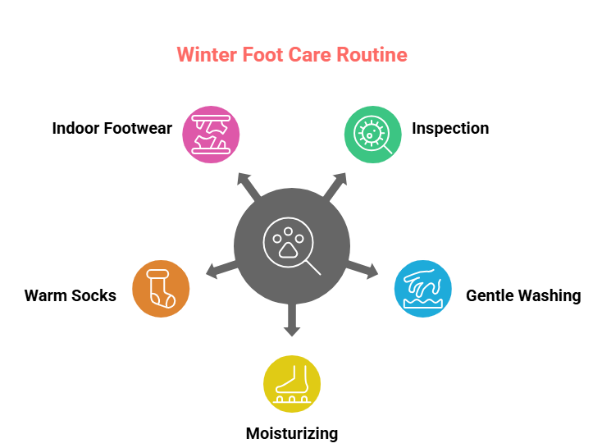
- Inspect your feet daily: Check for cuts, redness, swelling, or changes in skin colour.
- Wash gently: Use warm water and mild soap to clean the feet without causing dryness.
- Moisturize: Apply cream to heels and tops of feet; avoid between toes to prevent fungal infections.
- Keep feet warm: Wear cotton or wool socks to maintain warmth and improve circulation.
- Wear shoes or slippers indoors: This protects against accidental cuts and injuries.
Nail Care and Footwear
- Trim nails straight across, avoiding deep cuts on the sides.
- Select shoes with soft padding and ample space to prevent pressure wounds.
- Avoid tight shoes that restrict circulation.
Additional Winter Protection Tips
Beyond daily cleaning and moisturising, several habits improve foot health in winter:
- Foot massage: Gently stimulates blood flow.
- Avoid direct heat: Hot water bottles or heaters can burn sensitive skin.
- Change damp socks immediately: Moisture can lead to fungal infections.
- Monitor blood sugar levels: Good control enhances skin healing and prevents complications.
Implementing these steps consistently ensures that Winter Foot Care Tips for Diabetics remain effective and prevent most winter-related foot problems.
When to Seek Medical Attention
Prompt action is necessary if you notice:
- Cuts or wounds that do not heal
- Redness spreading across the foot
- Swelling, warmth, or tenderness
- Pus or unusual discharge
- Sudden numbness or pain
For expert care and guidance, you can consult ஈரோடு நீரிழிவு அறக்கட்டளை, where trained specialists provide professional diabetic foot care and preventive advice.
Protecting Your Feet This Winter
Winter foot care is essential for people with diabetes. A daily routine that includes inspection, moisturising, warm socks, proper footwear, and stable blood sugar levels can prevent infections and injuries. Consulting experts at ஈரோடு நீரிழிவு அறக்கட்டளை ensures safe and effective foot care practices. By following these tips consistently, you can keep your feet healthy, comfortable, and protected throughout the cold months. Always remember that consistent application of Winter Foot Care Tips for Diabetics is key to maintaining strong foot health during winter.