
Health conditions rarely affect only one part of the body. Many diseases are interconnected, influencing multiple organs and systems. One of the most important examples of this connection is Heart Disease and Diabetes. People living with diabetes face a higher risk of cardiovascular complications because elevated blood sugar levels gradually damage blood vessels and nerves over time.
Heart disease is one of the leading causes of illness among diabetic patients worldwide. However, understanding the relationship between diabetes and heart health allows individuals to take preventive steps early. Through lifestyle changes, regular monitoring, and medical guidance, many cardiovascular risks can be reduced. Healthcare centers such as Erode Diabetes Foundation actively promote awareness and preventive strategies to help patients manage diabetes while protecting their heart health.
Understanding the Link Between Heart Disease and Diabetes
Diabetes affects the body’s ability to regulate blood sugar levels. When glucose remains high in the bloodstream for long periods, it damages blood vessels and the nerves that control the heart and circulatory system.
This damage increases the several cardiovascular conditions, including:
- Coronary artery disease
- Heart attack
- Stroke
- High blood pressure
- Heart failure
These conditions often develop gradually and may not show obvious symptoms in the early stages. As a result, individuals with diabetes must be especially vigilant about monitoring their cardiovascular health. Preventive healthcare programs offered by Erode Diabetes Foundation emphasize the importance of early detection and proper management of these risks.
Why Diabetes Increases the Risk of Heart Disease
Several physiological changes caused by diabetes can contribute to heart problems. Understanding these changes helps patients take proactive measures to protect their cardiovascular health.
Damage to Blood Vessels
High blood sugar levels damage the inner lining of arteries. Over time, this leads to narrowing and hardening of blood vessels, reducing the smooth flow of blood throughout the body.
Increased Cholesterol Levels
Diabetic patients often develop abnormal cholesterol levels. Higher levels of LDL (bad cholesterol) and lower levels of HDL (good cholesterol) increase plaque buildup inside arteries, raising the risk of heart disease.
High Blood Pressure
Diabetes frequently occurs alongside hypertension. When blood pressure remains elevated, the heart must work harder to pump blood, placing additional strain on the cardiovascular system.
Chronic Inflammation
Long-term high blood sugar can trigger inflammation in the body. This inflammation weakens blood vessels and increases the chances of cardiovascular complications.
Early Warning Signs of Heart Problems in Diabetic Patients
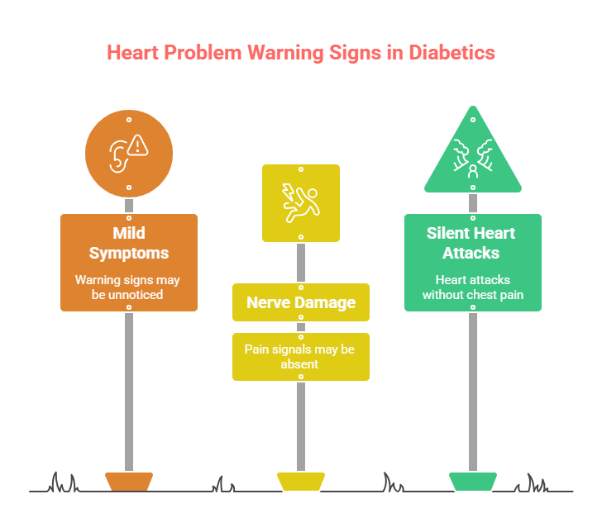
Heart disease symptoms may sometimes appear differently in people with diabetes. In some cases, the warning signs may be mild or even unnoticed.
Common symptoms include:
- Chest discomfort or pressure
- Shortness of breath
- Unusual fatigue during daily activities
- Pain in the arms, neck, jaw, or back
- Irregular heartbeat
- Swelling in the legs or feet
Because diabetes can damage nerves that normally signal pain, some heart attacks may occur without severe chest pain. This condition is sometimes referred to as a “silent heart attack.” Regular health checkups therefore become extremely important for diabetic patients.
Major Risk Factors That Increase Heart Disease in Diabetes
Certain lifestyle habits and health conditions can further increase the risk of cardiovascular disease among diabetic individuals.
Sedentary Lifestyle
Lack of physical activity slows metabolism and contributes to weight gain and poor circulation, increasing the burden on the heart.
Unhealthy Diet
A diet high in processed foods, sugary drinks, and saturated fats raises blood sugar and cholesterol levels simultaneously.
Smoking
Smoking damages blood vessels and significantly increases the likelihood of heart attacks and strokes, especially in diabetic patients.
Obesity
Excess body weight increases insulin resistance and puts additional pressure on the heart and circulatory system.
Chronic Stress
Long-term stress can lead to hormonal changes that raise blood pressure and disrupt blood sugar control.
Managing these risk factors plays a crucial role in reducing heart complications.
How to Protect Heart Health When Living With Diabetes
Fortunately, several preventive measures can help diabetic patients protect their heart health and reduce long-term risks.
Maintain Healthy Blood Sugar Levels
Keeping blood sugar within the recommended range is one of the most important steps in preventing damage to blood vessels and nerves.
Follow a Heart-Friendly Diet
Healthy nutrition supports both blood sugar control and cardiovascular health. Recommended food choices include:
- Whole grains
- Fresh fruits and vegetables
- Lean proteins
- Nuts and seeds
- Healthy fats such as olive oil
Limiting fried foods, processed snacks, and excess sugar helps maintain healthy cholesterol and blood pressure levels.
Exercise Regularly
Physical activity strengthens the heart and improves blood circulation. Even moderate activities such as walking for 30 minutes a day can significantly improve heart health.
Monitor Blood Pressure and Cholesterol
Routine medical tests help detect abnormalities early. Doctors may recommend medications if blood pressure or cholesterol levels become elevated.
Quit Smoking and Limit Alcohol
Avoiding smoking and excessive alcohol consumption significantly lowers the risk of cardiovascular complications.
Medical experts at Erode Diabetes Foundation often advise combining lifestyle improvements with regular medical supervision for optimal health outcomes.
The Role of Preventive Screening
Preventive healthcare plays a major role in identifying cardiovascular risks early. Diabetic patients should undergo routine screening tests such as:
- Blood pressure monitoring
- Lipid profile testing
- Electrocardiogram (ECG)
- Blood sugar monitoring
- Kidney function tests
- Echo scan for heart
These tests allow healthcare professionals to detect potential issues before they develop into serious complications. Screening programs conducted by Erode Diabetes Foundation help patients stay informed about their health and take timely action.
Lifestyle Habits That Support Heart Health
Small daily habits can have a significant impact on both diabetes control and heart health. Consistency is the key to long-term wellness.
Simple healthy habits include:
- Eating balanced meals with controlled portions
- Staying physically active every day
- Managing stress through relaxation techniques
- Getting adequate sleep
- Attending regular medical checkups
Over time, these habits strengthen the body’s natural ability to maintain stable blood sugar and protect the cardiovascular system.
A Holistic Approach to Managing Diabetes and Heart Health
The body functions as an integrated system where each organ influences the others. Managing diabetes effectively helps protect the heart, kidneys, nerves, and overall wellbeing. A holistic approach combining lifestyle improvements, preventive screening, and medical guidance offers the best defense against complications.
Healthcare providers continue to emphasize education and early detection to reduce the burden of chronic diseases. Institutions such as Erode Diabetes Foundation support patients through awareness programs, screenings, and personalized treatment plans.
Building a Heart-Healthy Future
Good health is not achieved through a single decision but through consistent daily habits. Monitoring blood sugar levels, maintaining a balanced diet, staying active, and seeking regular medical advice all contribute to better heart health for people living with diabetes.
When individuals take preventive steps early, they not only control diabetes more effectively but also reduce the risk of serious heart complications. With awareness, commitment, and proper healthcare support, living a healthy and active life with diabetes becomes entirely possible.
FAQs
1. Why do people with diabetes have a higher risk of heart disease?
High blood sugar damages blood vessels and increases cholesterol buildup, raising the likelihood of cardiovascular problems.
2. Can heart disease be prevented in diabetic patients?
Yes. Maintaining healthy blood sugar levels, exercising regularly, and following a balanced diet can significantly reduce risk.
3. What are the early symptoms of heart disease in diabetes?
Symptoms may include chest discomfort, shortness of breath, fatigue, and swelling in the legs.
4. How often should diabetic patients check their heart health?
Most doctors recommend cardiovascular screening at least once a year, especially for individuals with long-term diabetes.
5. What lifestyle changes help protect the heart in diabetic patients?
Healthy eating, regular exercise, stress management, adequate sleep, and routine medical checkups all support heart health.

